Google

Thursday, September 06, 2007

Thick Film Resistor vs Thin Film Resistor

If you are a system designer, you probably always find that there are two kinds of chip resistor, which are thick film resistor and thin film resistor. The question is, what is the difference between thick film resistor and thin film resistor?

Found this site that explains the difference.

Saturday, March 31, 2007

Cyclone series continues ...


Finally, Altera launched Cyclone III, after a couple of months lauching Stratix III. Of course, success stories should be continued... That's why we still see Cyclone III and Stratix III today.

To be honest, I anticipated improvement on the Cyclone III logic elements architecture compared with Cyclone II, such as implementing a 5-input LUT in a logic element. Nonetheless, other improved features are pretty interesting, too. I am particularly excited with M9K, PLL reconfiguration and improved I/O element.

The cost is an important factor when you are evaluating a new device. However, the cost factor is never mentioned in the data sheet or handbook. I am referring to Digikey for cost comparison among all the Cyclone series families. EP3C25 is chosen as benchmark as it is the only Cyclone III FPGA available now. The Cyclone II and Cyclone FPGAs that come closest to this density are EP2C20 and EP1C20, respectively. No doubt, from the table below, Cyclone III is certainly worth considered if you have a new design to start with a low-cost FPGA. At a slightly lower price, you can get a higher performance, same density and twice internal memory size for Cyclone III FPGA, compared with Cyclone II and Cyclone I.

Cyclone series

EP3C25F256C8NES

EP2C20F256C8

EP1C20F324C8

Price

$44.80

$42.70

$60.00

Low power consumption seems to be the highlight for Cyclone III in the Altera marketing slides. Unfortunately, that doesn’t interest me too much as I am not working very much on the portable designs. Anyway, I still hope to use 65-nm Cyclone III and Stratix III parts for my new coming designs.

Saturday, October 14, 2006

Can PLL self-locked without "External" input?

I was busy working on something and suddenly a crazy idea came up.


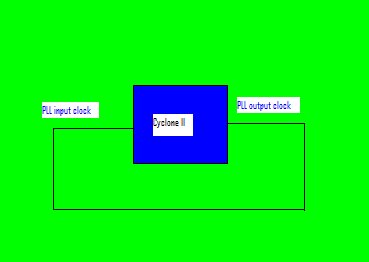
Can a PLL lock itself if I connect a PLL output clock to the PLL input clock on a PCB and both the PLL multiplication and division value is set to 1? I expected the answer is no, of course. But the curiosity kills sometimes. So, I went ahead and did the simple test.

I was using a Cyclone II device. Surprisingly, I saw the PLL locked output signal went high. However, the output signal frequency wasn't the expected frequency (10MHz). I probed at the PLL output clock (which was also connected to the PLL input clock signal), it showed about 420kHz.

So, what is the conclusion of this story? Nothing.

Saturday, September 02, 2006

Lattice Now Blogs!

Insteresting! Lattice now blogs! A lots of non-confidential-but-technical information out there!
It is always nice to see a FPGA vendor takes initiative to provide a platform for their knowledgable engineers to share their experience and knowledge. The good thing is that the knowledge shared is not only limited to Lattice products but all the vendors FPGA.
I know it is not easy for the writers as they now have one more repeatitive task in their long to-do list besides their daily jobs. Anyway, I hope they continue doing this! Bravo to all the writers!

Tuesday, August 01, 2006

Embed Tclet in Your HTML

Since started this blog, I found out that I need to study a minimum amount of HTML to display my writing correctly. Besides, I can have more control writing in "HTML mode" compared with "Compose mode". For an example, you can't just type the symbol "<" in your blog message, instead, you need to type "&lt;" to display "<" in your blog. Don't get me wrong, I am not trying to show off my HTML skills. In fact, I only have very basic and minimum knowledge about HTML.

Anyway, if I am not wrong (considering myself not a webmaster), it seems like HTML alone doesn't have the ability to let you do real-time programming stuff on your web browser, such as Mozilla Firefox or Internet Explorer. However, it can be done using a plugin.

There are many different types of plugins out there, but I choose to use Tcl applet or Tclet since I did some study on this language before. (If you've never heard of the Tcl/Tk language before, you can visit here.) I don't know how to embed a Tclet properly in blogspot. However, I manage to do it on another free site. This Tclet in this free site is to display all the gray code counter results in sequence after you have entered the number of bits your gray code counter is. I don't know how useful it is to you, but it is useful to me because I always forget how the gray code counter increments. Bear in mind that if you are a first-time user or viewer, you need to download and install the Tcl Web Browser Plugin for free. And, of course, it is SAFE to be installed in your PC. If you haven't installed it yet, you will see a blank square instead of the picture on the left side here.

It will be a bit long for me to describe how to embed Tclet in your HTML code here. The best source is the reference book that I show in here. Of course, you can look at the HTML code in the example above. Plenty of funky Tclet examples can also be easily found on web if you are interested to see others. Hope you like it.

Thursday, July 13, 2006

Save More Power In Handheld Devices


How to save more power when your CPLD device is in idle mode?
Use a very slow clock to reduce toggle rate? Partially disabling the logic inside the device? Well, why not powering off the device?
I came across this interesting article by accident and found it a simple yet smart idea to prolong the battery life of a portable handheld devices. In future, if I have the chance to design a portable product with interactive user interface, this idea will surely be the first one to cross my mind.
If for whatever reason, you have to use a FPGA in a battery-operated product, this article will sure help you more.

Sunday, July 02, 2006

OP-AMP Configurations Recall

It has been a while since I last dealed with op-amp. So, it is good to recall some of the most fundamental op-amp configurations, especially when I am dealing with them recently.
In my opinion, op-amp is like logic gates in analog world. You need op-amps to transfer your analog inputs into your desired analog outputs.
The following are some important notes for me, not for you, of course, :)!


Common NamesOp-Amp CircuitsTransfer Functions
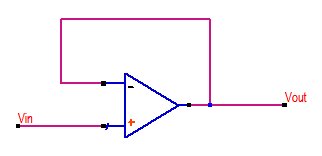
Voltage Follower AmplifierVout = Vin
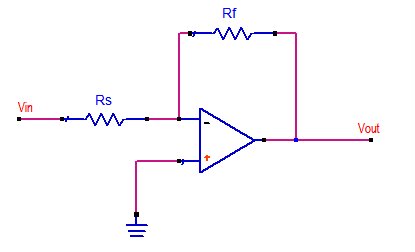
Inverting AmplifierVout = -(Rf/Rs)Vin
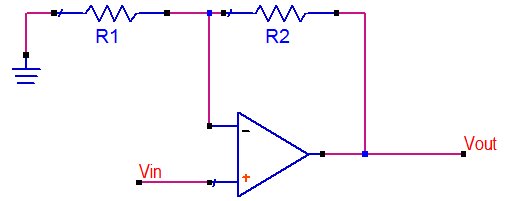
Noninverting AmplifierVout = (1+R2/R1)Vin
Difference AmplifierIf R1/R2 = R3/R4,
Vout = (Vin+ - Vin-)(R2/R1) + Vshift
Summing AmplifierVout = (R2/R1)* (V1+V2-V3-V4)